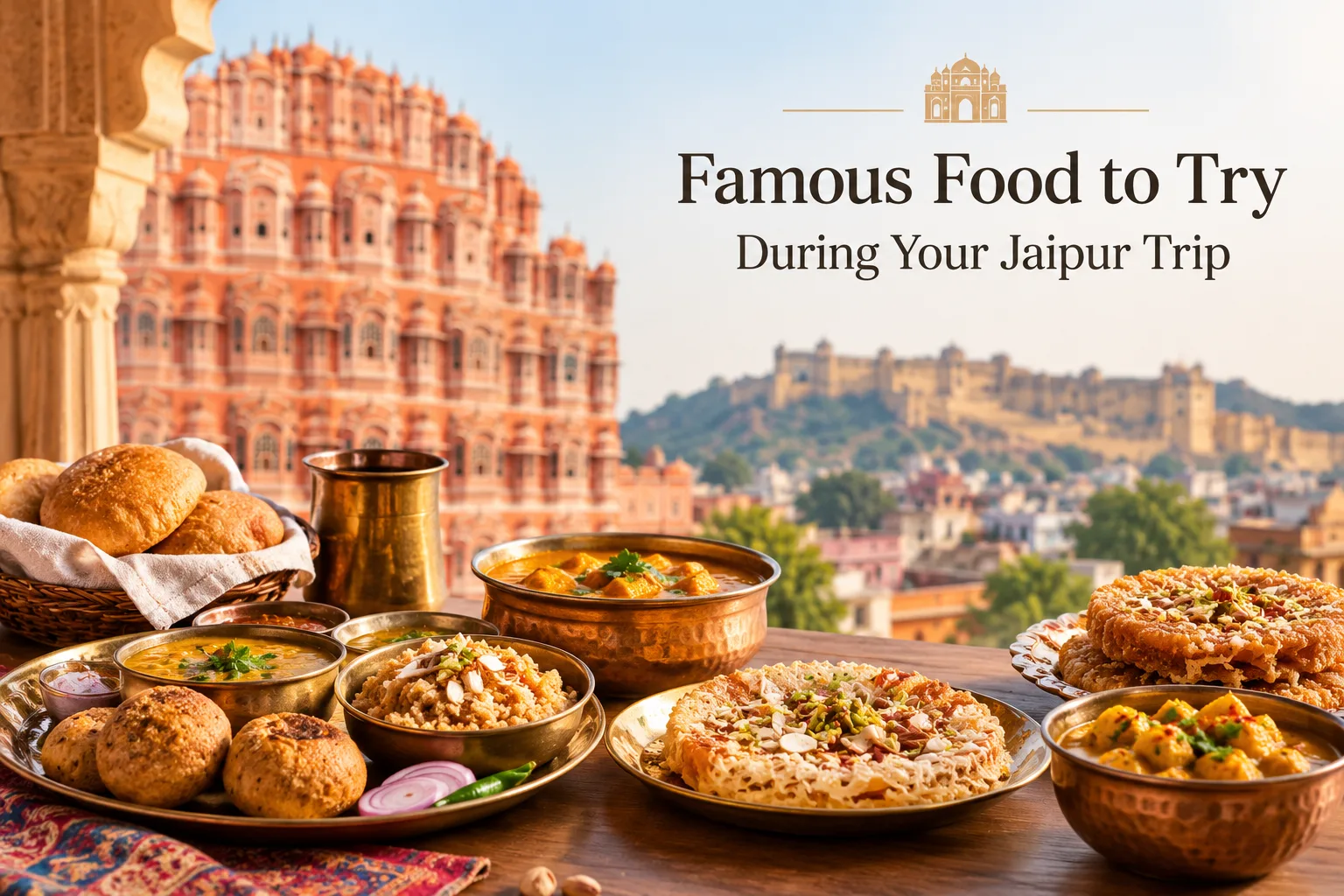
Jaipur is known for its pink-hued architecture, its crowded, colourful markets and its deeply rooted Rajasthani cuisine. Food is one of the best ways to understand the city. A crisp kachori eaten standing at a street stall, a thali with something new in every bowl, a syrupy sweet shared at the end of the day: these small moments often stay with travellers longer than any monument.
Whether you prefer savoury snacks, full traditional meals or sweets, there’s plenty to explore. This guide introduces the dishes most visitors look for, including dal baati churma, pyaaz kachori, ghewar and gatte ki sabzi, and explains how to enjoy them. You can try traditional local eateries and contemporary restaurants during the same trip, so there’s room for both the classics and a relaxed sit-down meal.
Traditional Rajasthani Dishes You Should Try in Jaipur
Rajasthani cuisine grew out of a dry climate and royal kitchens, which is why so many dishes rely on lentils, gram flour, dried beans, millets and ghee. These are the traditional dishes most worth seeking out.
Dal Baati Churma
The best-known Rajasthani meal has three parts:
- Dal: Spiced lentils, often a mix of several varieties
- Baati: Wheat dough balls, traditionally baked, and typically served broken open and dipped in ghee
- Churma: A sweet preparation, often made with coarsely ground wheat, ghee and sugar or jaggery
Together they make a rich, filling meal that’s popular with visitors who want to experience regional cuisine. Come hungry, and pace the rest of your day accordingly.
Gatte Ki Sabzi
This dish is made of gram-flour dumplings cooked in a spiced gravy, commonly served with roti or rice. It’s soft, tangy and comforting, and a good choice if you want something flavourful without too much heat. Recipes vary by restaurant and household.
Ker Sangri
Ker sangri is a traditional preparation made with desert beans (sangri) and berries (ker). It tastes earthy and slightly tangy, and it’s one of the most distinctly Rajasthani dishes you can try. If you’re unsure, order it as part of a thali so you get a small portion first.
Rajasthani Thali
A thali lets you sample several dishes in a single meal, often including dal, a vegetable or two, bread, rice, a sweet and an accompaniment or two. It’s an efficient way for first-timers to taste a range of flavours. The selection varies by restaurant, so ask what’s included before you order.
Famous Jaipur Street Food to Try
Street food is where Jaipur gets informal, fast and flavourful. Snacks are usually freshly made and best eaten hot.
Pyaaz Kachori
A crisp, flaky pastry filled with a spiced onion mixture. It’s a classic breakfast or mid-morning snack, often served with chutney and tea.
Mirchi Vada
A large chilli, filled with a seasoned mixture and coated in gram-flour batter before frying. It’s crunchy and savoury, and a popular tea-time snack. The heat varies, so ask the vendor if you’re sensitive to spice.
Samosa and Kachori
These familiar fried snacks are prepared and served in different styles across Jaipur, with variations in fillings, size, chutneys and accompaniments. Try them at a busy shop or stall and compare how each place does them.
Chaat
Chaat combines sweet, sour, spicy and crunchy flavours in one plate, usually topped with chutneys, yoghurt and sev. There are many popular variations, so pick one that suits your taste and start with a small portion.
Reader tip: Choose vendors with good hygiene practices and freshly prepared food, and prefer busy stalls where food turns over quickly. If you have dietary restrictions, ask about ingredients and preparation methods before ordering.
Famous Sweets to Try in Jaipur
Jaipur has a long sweet-making tradition, and many travellers plan a stop at a mithai shop as carefully as they plan a fort visit.
Ghewar
A disc-shaped, honeycomb-textured sweet associated with Rajasthan, made with flour and ghee and soaked in sugar syrup. It’s particularly popular during Teej and other festive occasions, so availability can vary across the year. Some versions are topped with rabri, nuts or saffron.
Mawa Kachori
A sweet variation of kachori, typically filled with a rich mawa mixture and often served with syrup. It’s indulgent and very sweet, so it’s best shared or kept for the end of a meal.
Feeni and Other Traditional Sweets
Feeni is a traditional sweet made from fine, crisp strands, and you’ll find it alongside other local sweets in many shops. Availability varies by shop and season, so ask what’s freshly made.
What to Bring Home from Jaipur
If you’d like to take sweets or snacks home, choose reputable shops, check the packaging and ask about storage and shelf life before you travel. Some sweets are best eaten fresh, while packaged namkeen and dry sweets usually travel better.
Best Places to Experience Jaipur’s Food Culture
Rather than naming one “best” spot, it helps to think about the kinds of places that give you different sides of Jaipur’s food scene.
Traditional Eateries
Traditional restaurants and long-established shops are a good choice for regional dishes like dal baati churma, gatte ki sabzi and ker sangri. Look for places that specialise in Rajasthani food, and consider a thali if you’d like variety.
Local Markets and Street Food Areas
Exploring established markets and neighbourhood eateries lets you combine shopping and snacking. Johari Bazaar, Bapu Bazaar and Tripolia Bazaar have snack shops and sweet stalls tucked between the textile and jewellery stores, and Masala Chowk is a convenient food court where you can try several local snacks in one place. Check current timings before you go, since some stalls open and close at different hours.
Restaurants for a Relaxed Meal
After a day of sightseeing, many visitors prefer a comfortable restaurant for a family meal, a longer dinner or a break from the heat. A restaurant setting also makes it easier to manage dietary needs and spice levels.
Vegetarian Food in Jaipur
Rajasthan has one of India’s richest vegetarian food traditions, so vegetarians are well served. Here’s what to look for:
- Dal baati churma: A complete vegetarian meal
- Gatte ki sabzi: Gram-flour dumplings in a tangy gravy
- Seasonal vegetable preparations: Local vegetables cooked with regional spices, which change through the year
- Traditional thalis: An easy way to try many vegetarian dishes at once
- Kachori and other snacks: Crisp, savoury bites that suit a quick stop
- Indian breads and accompaniments: Such as bajra roti, wheat roti, chutneys and pickles
- Traditional sweets: Ghewar, mawa kachori, feeni and more
Ingredients and preparation methods vary between restaurants, and ghee and dairy are widely used, so ask if you have specific dietary requirements.
How to Plan a Food Trail in Jaipur
A simple, relaxed food day looks like this.
Morning
- Start with a local breakfast or a freshly prepared snack, such as a kachori with tea.
- Explore nearby markets or attractions, such as Hawa Mahal and the old city.
Afternoon
- Enjoy a traditional Rajasthani lunch.
- Try a thali or a regional speciality like gatte ki sabzi.
Evening
- Explore local snacks or chaat as the markets come alive.
- Finish with a traditional sweet or a relaxed restaurant dinner.
Practical tips:
- Check restaurant opening hours, especially for traditional eateries and market stalls.
- Plan travel between food stops, since Jaipur’s traffic can add time.
- Ask about spice levels and ingredients.
- Carry drinking water.
- Consider portion sizes when trying several dishes. Sharing helps you taste more without overeating.
If you’d like a more detailed breakdown of dishes, our Jaipur food guide for first-time visitors goes further, and our guide to the best places to visit in Jaipur helps you pair meals with sightseeing.
Where to Enjoy a Comfortable Dining Experience in Jaipur
Choosing where to eat depends on the occasion. A quick snack and a celebratory dinner call for very different settings. When picking a restaurant, consider:
- Menu variety: A wider menu helps groups with mixed tastes and dietary needs.
- Comfortable seating: Important for families, older guests and longer meals.
- Cleanliness: Look at recent reviews and your own impressions on arrival.
- Service: Attentive service makes a big difference, especially when you’re ordering unfamiliar dishes.
- Location: Choose a place that fits comfortably into your day’s route.
- Suitability for families and groups: Check seating arrangements and whether the restaurant handles larger parties.
If you’d like to explore the dining offering at Om Villas by Amitesh, AMOM Restaurant and Bar is the property’s dining option. You can find details on the restaurant page. Menus and operating hours can change, so check the current menu, timings and availability before you visit, or contact the team directly. If you’re also planning a stay, you can compare the rooms on the website.
Enjoy Jaipur’s Food Culture During Your Stay
From rich dal baati churma and gatte ki sabzi to crisp kachoris, spicy mirchi vada and syrupy ghewar, Jaipur’s food reflects the city’s history and its sense of hospitality. Plan your meals as thoughtfully as your sightseeing, mix the traditional stalls with a comfortable sit-down dinner, and leave room for something sweet.
Exploring Jaipur’s food scene? Visit AMOM Restaurant and Bar at Om Villas by Amitesh to discover the property’s dining offering. Check the current menu and contact the team for details.
Frequently Asked Questions

Recent Posts

14 Nov, 2026