Jaipur, the Pink City of Rajasthan, is one of those destinations that rewards curiosity. Hilltop forts look down over the old city, royal palaces still hold the stories of the Kachwaha dynasty, and bazaars glow with block prints, jewellery and juttis. Add a food scene that runs from kachori at breakfast to dal baati churma at dinner, and it's easy to see why Jaipur is a permanent fixture on India's travel map.
This guide covers the best places to visit in Jaipur, from the big-name forts and palaces to quieter temples and local favourites. You'll also find suggestions for different kinds of travellers, sample one-, two- and three-day itineraries, and tips on choosing where to stay, so you can plan your Jaipur sightseeing with confidence.
1. Amer Fort
Perched on a hill above Maota Lake, Amer Fort (also written Amber Fort) is often the first name on any list of Jaipur tourist places. It is one of the city's most important heritage attractions and part of the UNESCO World Heritage listing of the Hill Forts of Rajasthan.
Why Visit Amer Fort?
Amer combines Rajput and Mughal architectural influences in red sandstone and white marble. The scale is impressive, but the details are what stay with you: mirror work, carved gateways, painted walls and courtyards that open onto sweeping views of the Aravalli hills.
Things to See at Amer Fort
- Suraj Pol and Chand Pol, the ceremonial gateways into the fort
- Jaleb Chowk, the main courtyard where processions once gathered
- Diwan-i-Aam, the hall of public audience, with its pillared pavilion
- Ganesh Pol, one of the most ornate gateways, with detailed paintings
- Sheesh Mahal, the "Palace of Mirrors," where tiny mirrored tiles catch light like stars
- Sukh Niwas and the terraced gardens, built for royal leisure
Best Time to Visit Amer Fort
Go early in the morning, ideally right at opening, to beat the crowds and the heat. Late afternoon also works well for softer light and photography. If you're visiting between October and March, the weather is comfortable for exploring the fort on foot.
How Much Time Do You Need?
Plan for 2 to 3 hours to see the main courtyards and palaces without rushing. History enthusiasts and photographers may want more.
2. Hawa Mahal
If Jaipur has a single postcard image, it's Hawa Mahal. Its honeycombed pink facade is instantly recognisable, and it stands right in the heart of the old city.
What Makes Hawa Mahal Special?
Built in 1799 by Maharaja Sawai Pratap Singh, the "Palace of Winds" was designed so royal women could watch street life and festivals without being seen. Its 953 small windows (jharokhas) let in cool breezes, which is how it earned its name.
Things to See
- The famous five-storey facade, best admired from the street or from the cafes opposite
- The small windows and latticework up close
- The rooftop-level views over Jantar Mantar, City Palace and the Badi Chaupar area
- The small museum and courtyard inside
Best Time to Visit
Early morning is ideal. The facade glows in the sunrise light and the streets are quieter. Many photographers also love the golden hour before sunset.
3. City Palace Jaipur
Right in the old city, City Palace is a sprawling complex of courtyards, gardens, museums and royal residences. Part of it is still home to the royal family, which gives the place a living-heritage feel.
What to See at City Palace
- Mubarak Mahal, with its textile and costume collection
- Chandra Mahal, the seven-storey residence of the royal family
- Pritam Niwas Chowk, home to the four richly painted Peacock Gate doorways
- Diwan-i-Khas, which holds the famous giant silver urns
- The armoury and the collection of royal artefacts
Why It Is Worth Visiting
City Palace blends Rajput, Mughal and European architecture and offers a close look at royal life in Jaipur. It's also one of the most photogenic spots in the city, particularly the peacock-themed doorways.
4. Jantar Mantar
Right next to City Palace, Jantar Mantar is a UNESCO World Heritage Site and one of the most unusual attractions in India.
Why Visit Jantar Mantar?
Built in the early 18th century by Maharaja Sawai Jai Singh II, this open-air observatory is a collection of large stone and marble instruments designed to track time, the positions of stars and planets, and eclipses. It's a rare chance to see how astronomy was practised centuries before modern technology.
What Can You See There?
- Samrat Yantra, the massive sundial, one of the largest in the world
- Jai Prakash Yantra, a pair of bowl-shaped structures used to map the sky
- Rashivalaya Yantras, instruments dedicated to the zodiac signs
A local guide or audio guide makes a big difference here, since the instruments are much more interesting once you know how they work.
5. Jal Mahal
Floating in the middle of Man Sagar Lake, Jal Mahal ("Water Palace") is one of Jaipur's most photographed sights, and it's an easy stop on the way to or from Amer Fort.
Best Time to See Jal Mahal
Sunrise and sunset are the best times. The light softens, the water turns golden, and the Aravalli hills form a lovely backdrop. Note that visitors generally admire the palace from the lakeside promenade rather than going inside.
Best Photography Opportunities
- The lakeside promenade at golden hour
- Wide shots that include the hills behind the palace
- Evening shots when the palace is lit up
7. Jaigarh Fort
Jaigarh Fort stands on a ridge above Amer Fort, and the two are connected by a fortified passage. Together they give a complete picture of the region's defensive and royal architecture.
What Makes Jaigarh Fort Different?
Jaigarh was built for defence and military strength rather than royal comfort, and it feels like it. Its thick ramparts, watchtowers and the famous Jaivana Cannon, said to be among the largest cannons on wheels in the world, tell the story of Jaipur's military heritage.
Things to Explore
- The Jaivana Cannon
- The Aram Mandir and the palace courtyards
- The weapons museum and cannon foundry
- Rampart walks with sweeping views of Amer Fort and Maota Lake
8. Albert Hall Museum
Set inside Ram Niwas Garden, Albert Hall (the Central Museum) is one of Jaipur's most elegant buildings, designed in the Indo-Saracenic style.
What to See Inside
The museum's collection includes miniature paintings, carpets, ivory work, metalwork, sculptures, decorative arts and a well-known Egyptian mummy. The building itself, with its arches, domes and detailed facade, is a highlight.
Why History & Art Lovers Should Visit
Albert Hall gives a compact overview of Rajasthan's craft traditions and art history. It's also especially beautiful after dark, when the facade is illuminated, so consider an evening visit.
9. Birla Mandir
At the foot of Moti Doongri hill, Birla Mandir (Lakshmi Narayan Temple) is a calm, modern counterpoint to Jaipur's older forts and palaces.
Architecture & Highlights
Built of white marble, the temple features intricate carvings, stained-glass details and a serene interior. Its clean lines and polished stone make it a peaceful stop, and it's especially attractive in the evening when the temple is lit up.
Best Time to Visit
Evenings are best, when the temple glows against the darkening sky and the atmosphere is at its most tranquil. Do check the temple's current visiting hours before you go.
10. Galtaji Temple
Tucked into a narrow valley in the Aravallis, Galtaji is a temple complex often called the "Monkey Temple," and it feels a world away from the city.
What Makes Galtaji Unique?
The complex is built around natural springs and sacred water tanks (kunds), surrounded by pavilions, temples and carved pink sandstone. It has been an important pilgrimage site for centuries, and the setting among the hills is striking.
What to Expect During Your Visit
Expect a lively, atmospheric place with plenty of resident monkeys, so keep food and loose items secured. Dress modestly, wear comfortable shoes, and allow time to wander. Many visitors also climb up to the hilltop temple for views over Jaipur.
Other Places to Visit in Jaipur
If you have extra time, or you've already seen the headline attractions, these are worth adding:
- Patrika Gate: A vividly painted gateway at Jawahar Circle, loved for its colourful murals and photo opportunities.
- Gaitore: A peaceful complex of royal cenotaphs (chhatris) built for Jaipur's rulers, carved in marble and sandstone.
- Moti Doongri Ganesh Temple: A revered Ganesh temple, popular with locals, next to the small palace on the hill.
- Central Park: One of the city's largest green spaces, good for a morning walk.
- Ram Niwas Garden: A leafy park that also houses Albert Hall and a zoo.
- Anokhi Museum of Hand Printing: A small museum in a restored haveli near Amer, dedicated to Rajasthan's block-printing tradition.
- Jaipur markets: Johari Bazaar, Bapu Bazaar and Tripolia Bazaar are perfect for textiles, jewellery, juttis, lac bangles and souvenirs.
- Masala Chowk: A clean, organised food court offering Jaipur street food classics in one place.
Best Places to Visit in Jaipur for Different Travelers
Every traveller wants something a little different from Jaipur. Here's how to match attractions to your travel style.
For Families
Families usually enjoy places with open space, variety and plenty of visual interest. Amer Fort, Jal Mahal, Ram Niwas Garden with Albert Hall, Central Park and Birla Mandir all work well. Break up the heritage sites with park time, and keep the days short enough that children stay comfortable.
For Couples
Nahargarh Fort at sunset, the Jal Mahal promenade, evening strolls around the old city and a rooftop dinner make for a memorable trip. Albert Hall at night is also wonderfully romantic.
For History Lovers
Amer Fort, Jaigarh Fort, City Palace, Jantar Mantar and Gaitore give you a layered picture of Jaipur's royal past. Hiring a guide at the larger monuments adds a great deal of context.
For Photography Lovers
Hawa Mahal at sunrise, Jal Mahal at golden hour, Patrika Gate, the Peacock Gate at City Palace and the skyline from Nahargarh are all photographer favourites.
For First-Time Visitors
Start with the essentials: Amer Fort, Hawa Mahal, City Palace, Jantar Mantar and Jal Mahal. Then add Nahargarh for the view and one bazaar visit to round out the experience.
How Many Days Are Enough for Jaipur?
Three days is the sweet spot for most travellers, but you can see the highlights in one or two if you plan well.
One-Day Jaipur Itinerary
- Morning: Amer Fort (arrive early), then a photo stop at Jal Mahal
- Afternoon: City Palace and Jantar Mantar
- Evening: Hawa Mahal from the street or a nearby cafe, and dinner in the old city
Two-Day Jaipur Itinerary
- Day 1: Follow the one-day plan above.
- Day 2: Jaigarh Fort and Nahargarh Fort in the morning and afternoon, Albert Hall Museum in the evening, and a bazaar walk or Masala Chowk for dinner.
Three-Day Jaipur Itinerary
- Day 1: Amer Fort, Jal Mahal, and a relaxed evening.
- Day 2: City Palace, Jantar Mantar, Hawa Mahal and the old city markets.
- Day 3: Galtaji Temple in the morning, Birla Mandir and Albert Hall in the afternoon, and sunset at Nahargarh Fort.
A three-day plan lets you slow down, enjoy the food, and avoid the rushed feeling that comes from cramming everything into a single day.
Where to Stay in Jaipur During Your Trip?
Where you stay shapes how your trip feels, especially in a city where you'll spend long days sightseeing in the heat. Before booking, think about:
- Location: Easy access to main roads and the attractions on your list saves time and energy.
- Room comfort: After a full day of walking through forts and bazaars, a quiet, clean, comfortable room matters.
- Accessibility: Look for straightforward check-in, easy transport connections and helpful staff.
- Dining: An on-site restaurant is a big convenience, especially with children or after a long day out.
- Events and banquet facilities: If you're combining sightseeing with a wedding or family function, a property that handles both is very handy.
- Rooftop experience: A rooftop spot for an evening drink or dinner is a lovely way to end a day in the Pink City.
- Family-friendly facilities: Spacious rooms and services that suit different age groups make travelling together much easier.
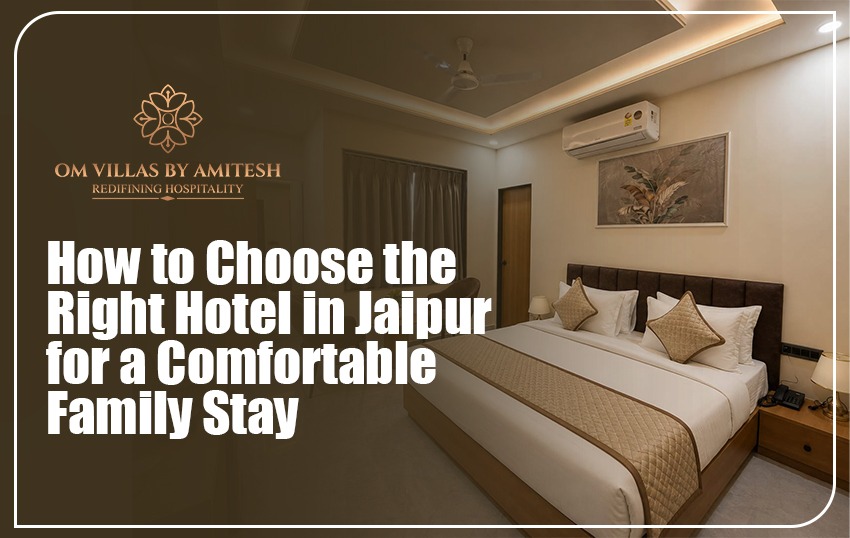
Om Villas by Amitesh in Vaishali Nagar, Jaipur brings many of these together under one roof. The property offers 22 rooms across three categories: the Club Room, the Club Premium Room and the Family Club Room. Guests can also enjoy an all-day restaurant, a rooftop bar with city views, a swimming pool and complimentary Wi-Fi. For weddings and celebrations, its banquet halls each host up to 150 guests.
If you're planning a family trip, our guide on how to choose the right hotel in Jaipur for a comfortable family stay covers what to look for in more detail. To check availability or ask about rooms, you can contact the Om Villas team directly.
Final Thoughts
Jaipur is a city best explored with a bit of planning and a lot of curiosity. Start early at the forts, save the palaces and museums for the heat of the day, and leave your evenings for sunsets, bazaars and good food. With the right itinerary and a comfortable base to come back to, your trip to the Pink City will be relaxed and memorable.